- Please wait...
What’s next in collecting trends 2026
A season for gold and silver

Read time: 7-9 mins
The global collectibles market is entering a decisive new phase, shaped by generational change, shifting values, and the continued rise of tangible assets. Leading this transformation is gold’s dramatic surge in 2026, reinforcing its role as both a safe-haven investment and a cultural object. Alongside it, silver and other luxury assets are gaining renewed relevance as Millennials and Gen Z redefine what it means to collect.
Gold: The macro shock
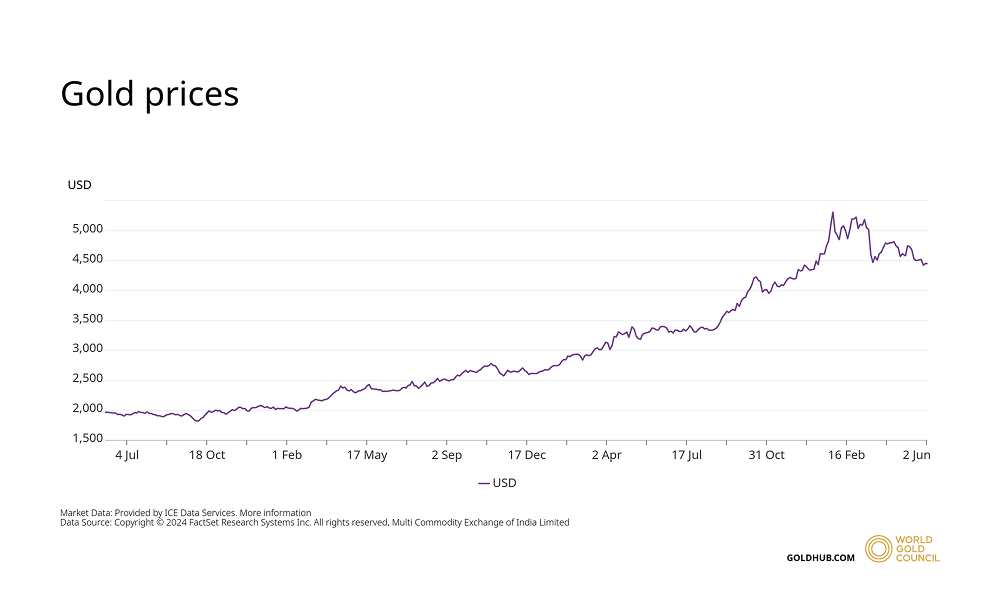
Gold’s performance has been exceptional. Prices have risen by 36% year-to-date and more than tripled since 2023, marking one of the strongest multi-year rallies in modern history. By April 2026, gold reached approximately £3,491 per ounce – up 45% on the previous year.
According to the World Gold Council, this is not a short-term spike but a structural shift reshaping both investment behaviour and jewellery production.
Historically, around 50% of global gold demand comes from jewellery, making the sector highly sensitive to price volatility. Manufacturers are responding with lighter designs, reduced material usage, and technologies such as 3D printing, creating a new design language defined by efficiency and creativity.
New collector
The most profound change is not in production but in the buyer mindset. The traditional codes of collecting: rarity, connoisseurship, provenance, and long-term value, are being reinterpreted by Millennials and Gen Z. “This generation has shifted the concept of ownership and value. It’s identity-driven and relational, rather than purely financial”, explains Dr Shirley Mueller, author of Inside the Head of a Collector: Neuropsychological Forces at Play.

“This generation has shifted the concept of ownership and value. It’s identity-driven and relational, rather than purely financial.” – Dr Shirley Mueller
Collectors are increasingly digital-first and values-led, with precious metals now sitting within broader lifestyle portfolios. As John Mulligan, Head of Sustainability at World Gold Council, comments, “gold’s rising value has brought a wider range of interest from a more diverse set of buyers,” while also changing how consumers think about ownership.
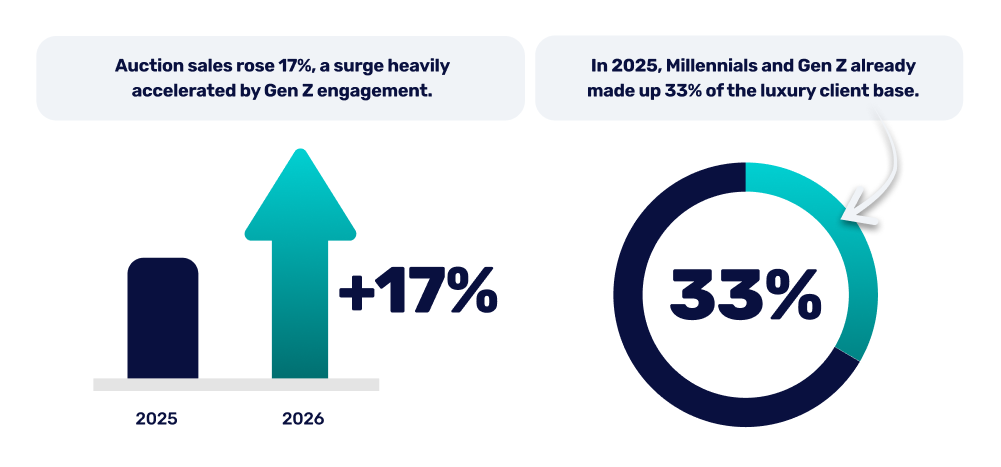
Auction houses are adapting quickly. With Millennials and Gen Z now accounting for 33% of Christie’s client revenue and 46% of new bidders, luxury categories such as jewellery are acting as key entry points. Sales in these areas are forecast to grow by 17% in 2026. Jewellery departments are central to this shift, with gold increasingly viewed not just as an adornment but as a values-led, investable object.
Sustainability
Sustainability is equally central. For younger collectors, ethical sourcing is not optional but integral to value, explains Mulligan. Around 80% of newly mined gold now comes through formal, standards-based supply chains, while demand for recycled metals continues to grow.
“Design remains central, but increasing awareness of intrinsic value is encouraging buyers to hold onto pieces as appreciating assets.”
– John Mulligan, World Gold Council
Gold jewellery
Despite rising gold prices, demand for jewellery at auction remains resilient.
“Ultimately, it is rarity that sustains collector demand, especially for well-preserved pieces distinguished by exceptional quality, scarcity, and clear provenance.” Jean Ghika, Head of Jewellery at Bonhams in London.
Demand is concentrated on signed vintage pieces from houses such as Bulgari and Cartier, alongside designers like Andrew Grima, who defined much of the 1960s and 1970s’ aesthetic. They are seeking pieces “that have investment value and wearability,” says Ghika.

Silver surge
Silver is also experiencing a resurgence with “altering perceptions as a result of rising prices”, comments Will Evans, Director at London Assay Office.
Prices have risen by 45-55% over the past year, with further gains in early 2026 (Royal Mint). As legacy silverware is revalued, some pieces are now worth more as raw material than as antiques. This has catalysed innovation across design, with makers repositioning silver as a medium for contemporary art and limited-edition collectible works.
“Rising prices have altered perceptions [of silver].”— Will Evans, London Assay Office.
Silver as art
Asprey Studio, led by Alastair Walker, is repositioning silver as a medium for art rather than functional luxury objects. The studio produces limited-edition sculptural works, integrating blockchain-based provenance tracking and art-led storytelling, and regularly exhibits at fairs such as Art Basel.
A striking example is the Rhino sculpture series, inspired by Albrecht Dürer’s 1515 Rhinoceros. Each piece took a year to complete and sold for £100,000, later being exhibited at the British Museum.
Walker’s international collector base spans men and women aged 18 to 70, characterised by highly sophisticated acquisition behaviour and frequent multi-piece purchases for both personal and investment purposes. “The story, artistry, craftsmanship and quality” of the complex designs, he says, drive desirability. “The value of silver doesn’t affect the market for these pieces or attitudes towards them. They are works of art. Our collectors want a connection to the piece; they appreciate its artistic value.”
The digital gold era
Gold is also becoming increasingly digitised. John Mulligan believes, “this is the future”, as Western markets see rising demand for app-based gold investment platforms that combine education, transparency, and low entry thresholds.
Platforms such as BullionVault and Goldmoney paved the way and now purveyors of gold-backed digital tokens, such as Pax Gold and Tether Gold, are further widening access to gold through fractional ownership, digital twin models, and blockchain technology that enhances transparency. These developments are reshaping gold into a more dynamic component of modern portfolios for both retail and institutional investors. Mulligan notes, “regulations and expectations are evolving”, and he points investors and retailers towards the World Gold Council’s guidance on responsible retail investment.
He adds that these innovations are not replacing traditional gold ownership, but expanding participation, particularly among younger, digitally native investors whose financial habits favour flexibility and accessibility.
“Wearable bullion” investment models are also emerging. Platforms such as 7879.co allow pieces to function both as wearable objects and liquid assets.

A market in transition
In this new collecting landscape, the most striking evolution is the rise of “liquid gold” – a form of ownership that is increasingly digital, fractional, wearable, and instantly tradable. It reflects a market where value is no longer fixed in objects alone, but flows between value, access, and identity, enabled by systems that reshape sustainability, technology, and participation through greater movement and transparency.
Thinking about how gold or other tangible assets fit within your overall financial picture? Y TREE’s advisors can help you weigh exposure, vehicles and risk.
Sources
- Christie’s, ‘$6.2B Projected Global Sales in 2025’, Christie’s Press, 2025, https://press.christies.com/62b-projected-global-sales-in-2025/
- World Gold Council, ‘Gold Price Chart (2023–2026 Spike)’, Goldhub Data, 2026, https://www.gold.org/goldhub/data/gold-prices
7879 - ‘Wearable Bullion and Digital Gold Platform’, 7879.co, 2026, https://7879.co
- Bonhams, ‘SCHLUMBERGER FOR TIFFANY: DIAMOND AND GEM-SET ‘LEAVES’ NECKLACE, CIRCA 1980’, Bonhams Fine Art Auctioneers, Lot Description, 2026
- World Gold Council, ‘How to Invest Well: Retail Gold Investment Principles (RGIPs)™’, Retail Gold Investment Official Platform, 2026, https://retailinvestment.gold/en
- Asprey Studio, ‘Institutional Collection and Fine Jewelry Overview’, Asprey Historical Archive, 2026
- Dr Shirley M. Mueller, ‘The Psychology of Collecting and Precious Material Investment’, Analytical Review, 2026
- Royal Mint, ‘UK Precious Metals Allocation Data and Market Metrics’, Royal Mint Statistical Release, 2026
- The Goldsmiths’ Company, ‘Assay and Hallmarking Standards for Fine Bullion’, Goldsmiths’ Hall Records, 2026
- The London Assay Office, ‘Official Validation and Precious Metals Compliance Index’, London Assay Infrastructure Data, 2026
About the author
Nina Plowman
Founding Director of Unearthed Comms.
Nina Plowman is a strategic communications consultancy working with luxury brands, private client businesses and cultural organisations. An award-winning PR agency founder recognised in PRWeek’s Power Book, she has advised world-leading names across the art world, fine wine and spirits, financial services and lifestyle sectors. Her work explores the cross-over between culture, collecting, luxury assets and legacy.
